When the City Approves a Flawed Design: The Ashville Park Precedent
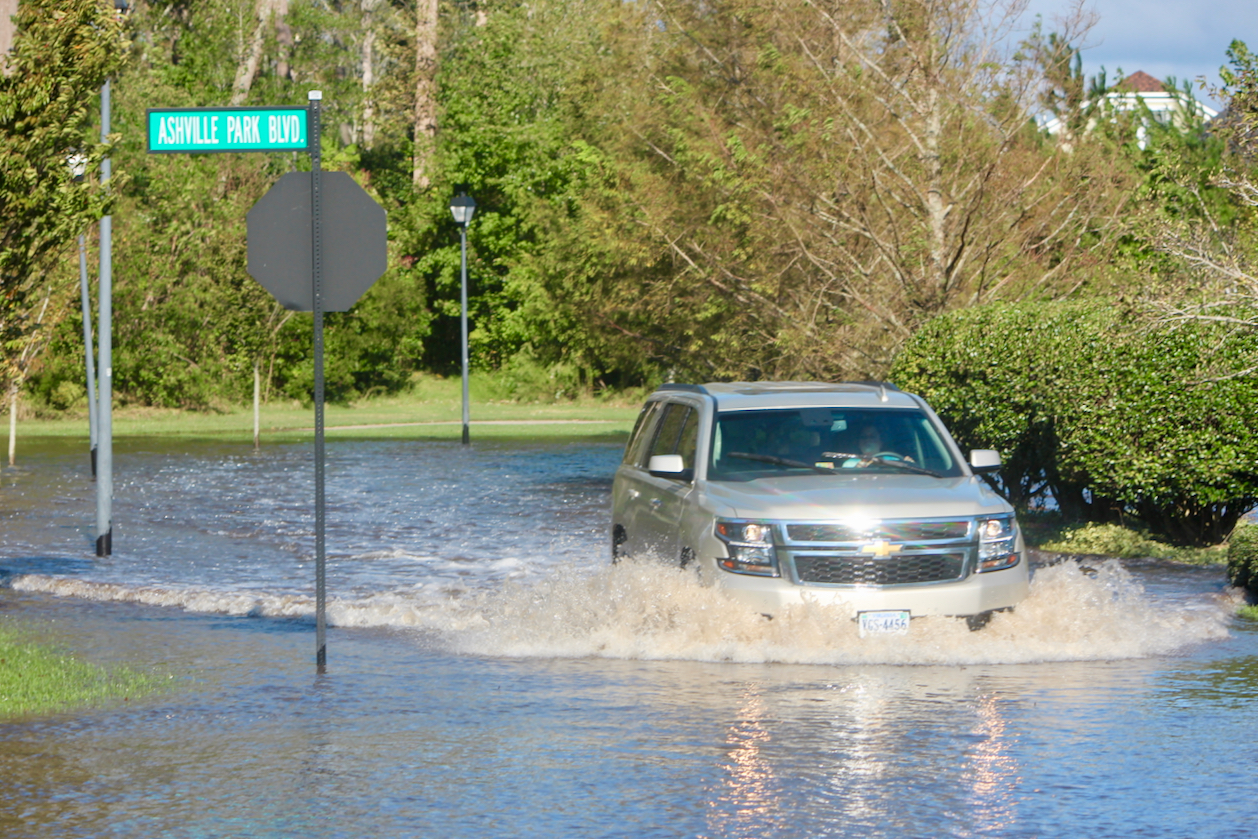
In 2004, the City of Virginia Beach approved a 499-home master-planned community called Ashville Park in the Princess Anne area. The development would sit on approximately 450 acres, draining through a network of 15 interconnected lakes to Ashville Creek, then Muddy Creek, and ultimately to Back Bay.
The stormwater design went through the city's standard review process. City staff evaluated the plans. The system was accepted. Construction began around 2006.
Twelve years later, water was inside people's homes.
The Storms
Three back-to-back storms in the fall of 2016 exposed what the city's review process had missed:
- Tropical Storm Hermine — September 1, 2016
- Tropical Storm Julia — September 19, 2016
- Hurricane Matthew — October 2016
Ashville Park received 13 inches of rain during Matthew alone. The neighborhood's roughly 299 existing homes experienced widespread flooding. This was not just ponding on roads. Water entered residences. Families lost property. People lived in fear of the next storm.
At a city council meeting afterward, one neighbor said plainly: "I can tell you honestly I live in fear that it is going to flood again."
What the City Found
Deputy City Manager Tom Leahy conducted a study of the Ashville Park stormwater system. His findings were damning. The system that the city had reviewed and accepted was, in his words, deficient across the board:
- Not enough inlets, and they were not large enough. Water flowing on streets could not leave fast enough.
- Pipes were not big enough to carry water from the streets to the retention lakes.
- Ditches and channels were undersized.
- Even if the lakes had room, the pipe system could not move water fast enough to prevent flooding.
- Wind-driven tides from Back Bay reduced available storage capacity in the ponds before storms even arrived.
Leahy told council: "The water that's flowing on the streets cannot leave the street fast enough because there's not enough inlets. The pipes themselves are not big enough to carry the water to the lakes."
Every component of the drainage infrastructure — inlets, pipes, channels, ponds — was inadequate. And the city had signed off on all of it.
The Developer Was Gone
Here is where the story turns from an engineering failure into a civic lesson.
The original developer who designed and built the stormwater system went bankrupt during the 2008-2010 housing crisis. The company entered foreclosure. The entity ceased to exist.
When 299 families needed someone to fix the flooding, there was no developer to hold accountable. No entity to sue. No insurance policy to claim against. The limited liability company that built the flawed system was dissolved.
The city "had no choice but to accept the drainage system as it was," the Princess Anne Independent News reported.
In 2012, HomeFed Corporation, a California-based development company, purchased the remaining undeveloped portion of Ashville Park at a foreclosure auction. HomeFed was not responsible for the original design. They inherited a problem.
The Fix: $34 Million and Counting
Phase 1: $11 Million
In June 2018, city council was briefed on a remediation plan. The scope was enormous:
- A new "smart" stormwater pumping system connecting an enlarged network of retention ponds
- A sluice gate and weir at Flanagans Lane to block water from Back Bay and Ashville Bridge Creek from flowing backward into the neighborhood's ponds during flooding events
- Enlargement of existing wet ponds and construction of new ones
- Ditch and culvert improvements throughout the neighborhood
- Elevation of Sandbridge Road with new pipes underneath
- Outfall improvements to Ashville Creek
- 800 trees planted throughout the neighborhood for water absorption
The cost: approximately $11 million for Phase 1.
Who Paid
After heated council debate, a cost-sharing agreement was reached:
| Party | Share | Amount |
|---|---|---|
| City of Virginia Beach (taxpayers) | ~72% | ~$8 million |
| HomeFed Corporation (current developer) | ~28% | ~$3.1 million |
HomeFed also surrendered approximately $2.1 million in water quality credits to the city. In exchange, HomeFed was allowed to modify the layout of future construction, increasing one village from 98 to 116 homes. HomeFed could not expand construction until it completed its share of improvements.
The council vote was contentious. On June 19, 2018, council voted 7-2 to defer both the flooding mitigation plan and an associated rezoning. Councilmember Barbara Henley moved to defer. Vice Mayor Jim Wood and Councilmember Bobby Dyer voted against postponement. On July 3, 2018, council voted to authorize City Manager Dave Hansen to execute the agreement.
Phase 2: $23 Million (Proposed, Not Funded)
Phase 1 addressed the most urgent problems but did not fully solve the flooding. Phase 2 would include new underground stormwater pipes and additional storage capacity to move water to Ashville Creek. The estimated cost: $23 million. As of March 2026, Phase 2 has not been approved or funded. It is unclear who would pay.
Total potential remediation cost: approximately $34 million — to fix a stormwater system that was designed by a developer, reviewed by the city, and accepted through the standard approval process.
What Council Members Said
Barbara Henley (Princess Anne District)
Henley, whose district includes Ashville Park, was the most vocal. During the 2018 council deliberations, she asked the question that resonates far beyond one neighborhood:
"Are we going to continue to go forward with development in areas that we know have serious potential for flooding?"
She also noted the broader precedent:
"I think what we do with this is really going to be a precedent for other applications."
And the urgency:
"Of course it can't be completed by this fall, but we're all gonna hope we don't get another storm."
And the scope beyond Ashville Park:
"It's not just this one neighborhood, we are concerned about the others and that's one thing about this proposal that we did adopt. It gives us the opportunity to address some of the areas to the south and east that also flood."
Bobby Dyer (Now Mayor)
Then-Councilmember Bobby Dyer voted against the June 2018 deferral, indicating he wanted to move faster on the remediation. He is now Mayor of Virginia Beach.
The Lawsuits
Argos Properties v. City of Virginia Beach (2018-2019)
In the wake of the Ashville Park flooding, the political environment around flood-zone development in Virginia Beach shifted. In April 2018, City Council denied a rezoning application from Argos Properties II, LLC for a 32-home subdivision on Princess Anne Road — despite city staff initially recommending approval.
Barbara Henley moved to deny the application. Planning Commission had already voted 7-3 against it in February 2018, citing flooding concerns at the subdivision entrance.
The city required Argos to account for 1.5 feet of sea level rise in its stormwater analysis — a first for Virginia Beach.
Argos sued (Case No. CL18002289-00, Virginia Beach Circuit Court), claiming the city acted arbitrarily and imposed "ever-changing" requirements. Argos sought $1 million in damages.
In May 2019, the court ruled in favor of the city and dismissed the petition with prejudice. The court found the city acted within its lawful authority and recognized the city's right to factor future sea level rise into land use decisions.
Wetlands Watch described this as the first time a Virginia city said "no" to development because of flood risk.
The city's defense explicitly cited the Ashville Park experience. The city attorney argued: "City Council's concern with stormwater performance, flooding and sea level rise is the quintessential example of a rational basis."
Back Bay Restoration Foundation v. Army Corps of Engineers
Separately, the Back Bay Restoration Foundation challenged an Army Corps permit (NAO-2001-02223) that allowed HomeFed's subsidiary (HOFD Ashville Park LLC) to fill 1.49 acres of wetlands for new lots, parking, amenities, and stormwater infrastructure in the Ashville Park expansion.
The Foundation argued the Corps failed to comply with Clean Water Act guidelines and failed to hold a public hearing. A federal court found the claims had no merit and upheld the Corps' permit.
The Smart Stormwater System
Phase 1 construction was completed by late 2023. The system now works as follows:
- Engineers can proactively draw down water levels in the retention ponds before forecasted storms, increasing available storage capacity by 44% to 58%
- The pump station and gated weir at Flanagans Lane prevents Back Bay water from flowing backward into the neighborhood during tidal events
- During a 10-year storm: a few hours of reduced flooding in the most affected villages
- During a 100-year storm: nearly a full day of reduced flooding
The system is a significant improvement. But it took 7 years from the 2016 storms to complete, cost taxpayers $8 million, and the neighborhood still floods — just less, and for shorter durations.
The Lesson for 1001 Virginia Avenue
On March 31, 2026, a resident at the Shadowlawn Civic League meeting asked city staff to explain what happened at Ashville Park. The city did not answer the question.
The parallel is uncomfortable but direct:
| Ashville Park | 1001 Virginia Avenue | |
|---|---|---|
| Stormwater review | City reviewed and approved | City reviewing now (4th submittal) |
| Design concerns | System was undersized across the board | Developer's own soil test shows zero infiltration capacity, but design assumes infiltration |
| Flooding context | Built near Back Bay with tidal influence | Built in FEMA Zone AE with tidal connection to Rudee Inlet/Atlantic |
| Developer structure | LLC went bankrupt | Shadowlawn North LLC (limited liability) |
| Who pays for failure | Taxpayers bore 72% of $11M Phase 1 | City says flood damage to neighbors is "a private litigation matter" |
| Environmental review | Wetlands filled with Army Corps permit | Blank Army Corps Form 6285 submitted |
| Council oversight | Conditional zoning required council vote | By-right development — no council vote |
The most important difference: Ashville Park at least required conditional zoning approval, which gave council the opportunity to attach conditions. The 1001 Virginia Avenue project is by-right, meaning it goes through the same staff-level review process that approved Ashville Park's deficient system — but without any council involvement at all.
Barbara Henley's question from 2018 echoes: "Are we going to continue to go forward with development in areas that we know have serious potential for flooding?"
At 1001 Virginia Avenue, the answer appears to be: the code doesn't give the city a choice.
Sources
- City council briefed on possible fix for Ashville Park's flooding — WTKR, July 2017
- Virginia Beach neighborhood to receive flooding relief — 13NewsNow, July 2018
- While residents wait for answers, City Council to consider cost-sharing options — Princess Anne Independent News, July 2018
- Deal clears way for Ashville Park improvements — Princess Anne Independent News, August 2018
- Developer's lawsuit followed rezoning denial — Princess Anne Independent News, October 2018
- City Says "No" to Development Because of Flood Risk — Wetlands Watch, 2019
- Flood-prone neighborhood could see even more development — WAVY
- New Smart Stormwater Project in Ashville Park — City of Virginia Beach
- Ashville Park Stormwater Project — City of Virginia Beach Public Works
- Ashville Park Drainage Improvements Phase I — Virginia Lakes and Watersheds Association
- Argos Properties v. City of Virginia Beach — Climate Case Chart
- Army Corps Public Notice NAO-2001-02223 — USACE Norfolk District
- Ashville Park Flood Risk — First Street Foundation